Tuesday, 14 October 2014

REALISATION: Blog entry 9

Experimentation - Capercaillie

Add captionExperimentation - Capercaillie

Experimentation - Capercaillie

Experimentation - Capercaillie

Experimentation - Capercaillie

Experimentation - Capercaillie

This is just some brief continuation of my experimentation with this idea. For this one I've been thinking more along the lines of a logo (although this would be something that is also part of the main pattern). I think these work better than those of the sparrows, but mainly because the capercaillie has a more recognisable shape. 
There is still a lot more to experiment with with this idea;
-full pattern overlay
-emulsion printed backgrounds
-other types of printed backgrounds
-working into photos by hand (? sewing, painting, drawing)
-different variations of image

I also still want to continue to experiment with how simple my designs are going to be, and I need to work on refining the birds them selves too.
REALISATION: Blog entry 8

Experimentation photoshop - sparrows
This image is just another little bit of experimentation carried on from before, with spots and dots and just trying little things that I might be able to incorporate into the layers of my pattern. I've also been thinking about how Mel Lim takes small aspects of her patterns and uses it on a range of things..I think this is something that I should be thinking of as, I'm not sure what exactly my outcome will be, but I'm currently thinking that I will be a range of things, all tied together by one pattern. Using small aspects of the design on different things is a good way to connect them all together under one project.

I have been looking into the active projects by the RSPB to get more information on the issues surrounding sparrows, to get a better grasp on what gap my project could fill;

London House Sparrow Parks Project
Recent research has shown house sparrows in urban areas suffer from a lack of invertebrates (insects) to feed their young. This was shown by a study in Leicester, where poor condition and death of young chicks was linked to low numbers of invertebrates in their diet (RSPB and De Montfort University study). A large-scale feeding experiment in London (RSPB study) has demonstrated the importance of invertebrates for the survival of young chicks. Through this project, we tested more natural ways to increase the numbers of invertebrates available to sparrows and other birds in our urban green spaces. 
The London House Sparrow Parks Project tested different habitat management types in London parks with the aim of boosting invertebrate numbers and also seeds during the winter. This could benefit a host of urban birds, insects and other wildlife. 
Project objectives 
  • To test which of the following habitat management types benefit house sparrows and other species the most: (1) long grass (left to set seed over winter); (2) native wildflower meadows (with traditional haymeadow management); (3) 'Wildlife seed plots' (based on wild bird cover options of the Environmental Stewardship Scheme for farmland). 
  • To provide advice to parks across London and the UK, based on the results 
  • To raise awareness of the problems facing urban wildlife and encourage people to consider wildlife in local parks and their own gardens 
Key dates so far 
  • 25 trial plots (and corresponding 'control' plots of normal park management) were set up in 20 parks across London 
  • Three years of monitoring have been completed (bird, insect and seed numbers) 
  • A team of forty dedicated volunteers helped to monitor bird use of the plots during the project
  •  Public engagement and educational activities were carried out at and near some of the parks 
  • Results have been analysed and papers will be written up to make the results widely available
(The RSPB, 2014) 
However, I still have more research to do;
-More into individual projects and what they actually were! (info on RSPB website is pretty vague)
-Research into invertebrates (suspected main cause for species decline)
-Other sparrow research (history/symbolism/etc..)

Hopefully doing more research will give me the fuel I need to become more productive.

I'm having an ideas dry spell, and am not sure what to make or where to go with anything at the moment..I think I've been too focused on having to have my stuff together for the upcoming concept panel, and also trying to figure out what my outcome maybe (which I of course wont know t the moment but I cant help but think about it...) so I decided to just brain storm, and have a couple of days just experimenting and see what come from it.

Photoshop experimentation - Urban Sparrows
This is just a random idea that I thought I'd try. I wanted to experiment with taking elements of my pattern and applying it in different ways, to different things..this was just a quick experiment with that (I intend to do more with this). I also had the idea to try a really simplified version of the style that I have been working with; I wanted to see if it would be possible to reduce it to one colour. I think this may work with a more recognisable bird (such as the capercaillie, which I'm going to try this with next) but with the sparrow, I just don't think that it is recognisable as that...so this kind of flops. The idea of using the photographs works (not my image by the way, just one from google for the sake of experimentation) to give a good idea of the location, and possibly the issue at hand. Overall though i'm not sure this idea works too well..but I will also try this, and some more variations with capercaillie, and the forest to see how that works. I will also try a couple more variations of this idea with sparrow and the city, although I'm not convinced by the idea anymore...


The RSPB, (2014). London House Sparrow Parks Project. [online] Available at: http://www.rspb.org.uk/whatwedo/projects/details.aspx?id=tcm:9-235650 [Accessed 9 Oct. 2014]. 

Wednesday, 8 October 2014

REALISATION: Blog entry 7

Since my tutorial I have been focusing on just one type of bird - I started with the house sparrow, but the past few days I haven't got very far with that idea, so today I thought I would have a crack at the Capercaillie, and see if I can make any more progress with my ideas.


Most of my research so far has been through the RSPB website, however the information here is quite limited. But, the RSPB works with a number of other trusts and charities in it's projects, and luckily for me, some of their information is much better. In this  document from the forestry commission Scotland, there is much more information about the plight of the capercaillie;


Threats to capercaillieThe main threats to the species have recently been both physical and organisational. Physical factors, in no particular order, include fence collisions, loss of eggs and chicks to predators, overgrazing, loss and fragmentation of pinewood habitat, lack of suitable brood habitat and human disturbance. Last but not least, a series of cold springs and wet summers, possibly connected to wider climatic change, has resulted in greater chick mortality. Organisational factors have included a limited capacity for long-term management and monitoring within core capercaillie areas, although this has improved substantially through recent conservation action. Effective future management of capercaillie must deal with this broad range of issues...
Capercaillie conservation action to date
Recent action has focused mainly on a major project funded partly by EU LIFE funds, partly match funded by Forestry Commission Scotland grants and action on the national forest estate. It delivered the following outputs in the period 2002-7:
• population monitoring on all project sites, covering 35,000 ha
• cver 1,000 hectares of habitat improved for chicks
• over 400 hectares of new chick habitat created through variable density
thinning and glade creation within dense plantations
• capercaillie-friendly management in 1,600 hectares of plantations
• predation reduced in over 34,000 hectares of forest
• 12 kilometres of deer fencing taken down to stop capercaillie collisions
• 22 kilometres of deer fencing marked to reduce capercaillie collisions...
The capercaillie species action planCapercaillie is a UK priority species for conservation action. The Capercaillie Biodiversity Action Plan Group is responsible for delivering the species action plan for capercaillie and is the essential lead contact for conservation advice, background guidance and more detailed information on the species. They also co-ordinate research and policy development and have a wide and representative membership. The Capercaillie Project Officer, funded by the Royal Society for the Protection of Birds (RSPB), SNH and Forestry Commission Scotland, has an important advisory role and encourages and assists forest managers to implement action for capercaillie in their forests. 
(Forestry Commission Scotland, 2014)

There is also the information on the capercallie biodiversity plan from the RSPB website it's self;

Work planned or underwayWhat do we plan to do next? 
  • Continue to work with partners, especially FCS and SNH, to undertake practical measures to improve their breeding success and survival. These measures include: reducing the threat posed by fences in the core areas, delivering direct management on the ground , ensuring strict implementation of relevant policies and providing advice on funding opportunities to estates under the Scotland Rural Development Programme.  
  • Continue working with forest managers on all key sites for capercaillie
  • Continue to undertake research and monitoring to inform conservation action 
  • Increase publicity for the plight of the capercaillie in Scotland
  • Organising regional surveys covering over 80 leks and assisting with brood counts throughout the capercaillie range 
  • Holding advisory events targeting forestry managers and estate managers 
  • Researching the impacts the recovering population of pine martens may have on capercaillie breeding success
What are the constraints to fully achieving the targets?
  • Deer, fencing and forestry management issues. Deer numbers remain high and there is still a problem with too much grazing and browsing on many sites 
  • Cold temperatures and wet weather in June, when the chicks are small, can reduce chick survival significantly 
  • It is thought that changes to spring weather patterns are having a negative impact on the nutritional status of females during egg formation – though the scientific case is not proven categorically yet 
  • Increases in mammalian predators such as foxes and crows may be having a negative effect on productivity.
(The RSPB, 2014)

One of the things that has been suggested to me is that I take each group/bird and appeal to a different audience with each one (outcome?)...so far, I'm struggling to come up with the things that I may end up creating, however, from looking at the goals of the conservation projects, and the reasons for the capercallie appearing on the RL, I am able to identify who my audience may be (land owners and farmers, and walkers/bird watchers being two solid groups that my work will need to be aimed at - producing two different things to do just that). Any thing that I make will then be tied together by my designs that generally have a much wider appeal that the current stuff that is used by the RSPB and other trusts and charities (wider appeal, more interest, hopefully).
_______________________________________________________

After previously looking at the work of Mel Lim (Blog entry 4) I decided that I wanted my patterns to be lots thicker, with more layers and elements to the design. This is also a good way to implement my original idea of including all the relevant information about the bird.

Pine pattern - experimentation background pattern
Capercaillie likes coniferous forests, so I wanted to use the pine and deep greens, also with using deep greens, and red on the birds, I thought that this might also reflect most commonly used colours of tartan (Scottish etc. is that a bit of stretch? Wanted to hint at Scotland with out making capercaillie themed tartan, not sure whether either of this works...). Like in Mel Lim's work, I want to create a really thick detailed patter with lots of little bits, so far i'm thinking of having a couple of subtle patterns working below the actual pattern that includes the birds.

[Now I'm looking at this and thinking..does it just look like fern??]

Pine pattern - experimentation background pattern (detail)
Continuing to experiment with different ideas and building up layers of pattern...
Experimentation - pattern elements


As well as starting to think about the individual bits that would make up my pattern, I also stared to think about the bird itself (colours, positions, composition yadda yadda..) and it struck me that this one is a pain for the simple style which I have adopted, because this bird is iridescent.  I had the same problem when trying to create a lapwing...it appears to be black, but actually shines a variety of different colours in different places. Although it would be possible to identify it if shown as being black..it isn't accurate, however the images work better when shown as black. Luckily, with the lapwing having quite a unique shape, this helped..but with capercaillie, if shown as being all black, it may be confused with a black grouse (also Red Listed).
Capercaillie - experimentation with colour
Tried to show the different colours of the bird...this may work better if the colours were closer to black than I have gone with here..?
Capercaillie - experimentation with colour
This really does look much better all black, but am not sure if it is identifiable as a capercaillie..further experimentation is required I think.

Capercaillie - experimentation with colour
I think this is slightly better, the colours more just hint at the true colours of the bird, rather than just ignoring it, and depicting it as a black bird...but this differentiation in colour is going to be difficult to print..it works on a screen, but getting the colours right to print could potentially be a bit of a mare.

Today have got lots of little rough bits and ideas together; tomorrow I might try and see if I can make this into a pattern, or at least a first draft of a pattern.

I also need to spend some of my time thinking of the ways in which my work can help the conservation effort - the things that my pattern may be used on to make a difference...I really need to get some idea soon...


Forestry Commission Scotland, (2014). Action for capercaillie. [online] Available at: http://www.forestry.gov.uk/pdf/fcs-action-capercaillie.pdf/$FILE/fcs-action-capercaillie.pdf [Accessed 8 Oct. 2014].

Tuesday, 7 October 2014

REALISATION: Blog entry 6

Experimentation with photoshop
I didn't try to make this into any kind of pattern, just wanted to experiment with a couple of things. Everything I do at the moment looks bloody horrible...I'm not happy with this, although a couple of things here do seem to work together, but I just cant make the composition look anything like decent today. 
I think what I need is lots more time to experiment and faff around...but I'm having kittens about concept panel in a couple of weeks, and how much I don't want a repeat of the last one. I need to make my idea make sense, but I cant even write down what it is that I'm doing at the minute. 

Monday, 6 October 2014

REALISATION: Blog entry 5

Timorous Beasties Iguana
Timorous Beasties

Timorous Beasties
Timorous Beasties
Timorous Beasties
(Timorousbeasties.com, 2014)

'Trellis' woodblock printed wallpaper, by William Morris, England, 1864. Victoria & Albert Museum, London
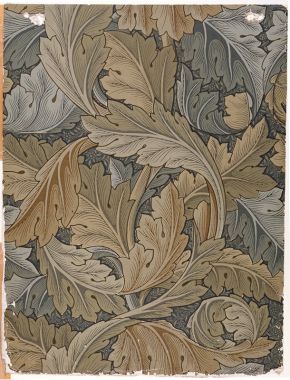
'Acanthus', wallpaper by William Morris, 1875.,  Victoria & Albert Museum, London
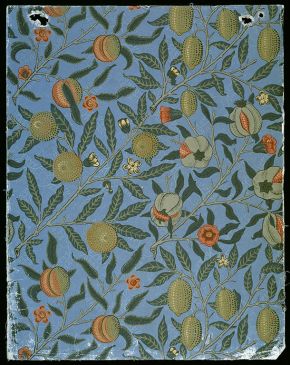
'Fruit' (or 'Pomegranate') wallpaper, by William Morris, 1866. Victoria & Albert Museum, London
(Vam.ac.uk, 2014)


Timorousbeasties.com, (2014). Timorous Beasties, Contemporary Fabrics, Wallpapers, Cushions, Lampshades & Rugs. [online] Available at: http://www.timorousbeasties.com/ [Accessed 7 Oct. 2014].

Vam.ac.uk, (2014). William Morris & Wallpaper Design - Victoria and Albert Museum. [online] Available at: http://www.vam.ac.uk/content/articles/w/william-morris-and-wallpaper-design/ [Accessed 7 Oct. 2014].
REALISATION: Blog entry 4

After my tutorial I've taken to the library to look at some books, and get some ideas in relation to patterns...
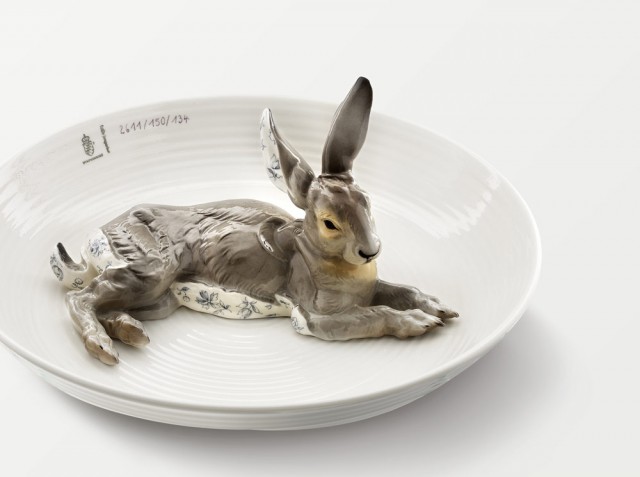
Hella Jongerious Nymphenburg Sketches 2004


Hella Jongerious Nymphenburg Sketches 2004
(Schmidt, Tietenberg and Wollheim, 2005)

I've included these because I think it's a really unusual and interesting way to use pattern, and maybe this is something that I could use in my own work. I've been trying to come up with ways I could apply patterns that stray away from typical textile furnishings and accessories..this is an excellent idea, although I'm not yet sure how this would translate to my own work.

Deanne Cheuk Paris Pyramids 2006
(Perry, 2008)

I love how this one all blends together so seamlessly, and I love that it's all watercolour...maybe I could have a go at making one like this? (Or are my computer generated images better???) I want to have a crack at making one of these, but I think I need to do more research into making repeat patterns first... 
Another thing I really like about this one is the detail in the background, it gives such a good impression of the environment that the birds live in, and this is something that I have been struggling to think of how to do within my own patterns.
Joy by Mel Lim
Joy by Mel Lim

Joy by Mel Lim


Joy by Mel Lim
(Surya, 2008)

These ones by Mel Lim, I love all the spots and dots, and different textures, and the pattern just seems to have so many different layers to it! It works really well, I think thats what I need to work on more with my own patterns, is making them lots thicker, with more going on. I also like the use of the creatures silhouette. 
What I also find really interesting with these patterns is how she takes part of it and applies to many other products (although I only managed to find a small selection here) this works really well, and links all of her work together. This is what I wanted with mine, if I were to produce lots of different outcomes.


Hanna Werning
(Surya, 2008)

I love the simple shapes in this one, I'm not too keen on all the bright colours; through my patterns i've been sticking to  muted colour pallet of the colours of the bird, which I really like, but I jut love the really simple shapes of this one.

Amanda Dilworth
(Style, 2010)

Solid shapes and lines..like this, could combine with dots and textures to create and really detailed pattern.
Lotta Bruhn

(Style, 2010)

Animals using really simple shapes. This is something that I need to work on more with my own images, get down just how simple I am going to make things, Bruhn does this really well.


Perry, M. (2008). Over and Over. 1st ed. New York: Princeton Architectural Press, p.42.


Schmidt, P., Tietenberg, A. and Wollheim, R. (2005). Patterns in design, art and architecture. 1st ed. Basel [Switzerland]: Birkhäuser, pp.142 - 143.

 Style, B. (2010). Print & pattern. 1st ed. London: Laurence King.

Surya, S. (2008). Patterns. 1st ed. Berlin: DOM publishers.
REALISATION: Blog entry 3

After my tutorial it's become clear that I just need to do lots more research, like so much more research;
-Pattern design/designers/theory (have a look in the library for some books)
-Practitioners - lots more
-William morris
-Timerous beasties


I had been thinking about splitting the RL into smaller groups, to narrow it down a little. After doing lots or research into why each species is endangered, and the current conservation projects the RSPB has embarked upon, I settled into looking at the Farmland initiative (concerning birds such as; skylark, corn bunting, turtle dove, grey partridge, lapwing, yellow wagtail, and tree sparrow), there are also separate projects which focus on birds such as the cappercaillie, the cuckoo, and urban house sparrows. 
By splitting it into groups, I would be able to do something a little different which appealed to different audiences, to aid with the conservation effort of our british birds and red listed species. 
However, Tim mentioned that to start with it might be interesting to just focus in on one bird, and to really get into it, and this would give me an idea of what could be done with this idea and this project.
I think I'm going start with the house sparrow, something so boring and ordinary, but it is the one that I have the most ideas for so far, and the issues surrounding house sparrows aren't just that we might lose house sparrows.
The reason house sparrows have made the RL is because they are struggling to find food. The lack of invertebrates in city centres is something that has a much bigger impact than just the possibility of losing another species of bird (this also affects other types of birds such as starlings). 
However, the other bird that I find really interesting is the cappercaillie...I may focus on two? not sure yet, something that I will decide on later.
I'm also aware that come concept panel, I am probably going to be questioned about the relevance of working with pattern...I need to have a good answer. My main thinking was that, pattern is very fashionable an d appealing right now, and I wanted to use that for good, to appeal to a wider audience, and use it along side conservation efforts that are already in place to make them more appealing.
So, my new action plan is to do lots more research, but also to focus in on one type of bird - the sparrow (for now any way). I hope that in doing my research more ideas will come with regards to the other birds on the RL.