REALISATION: Blog entry 7
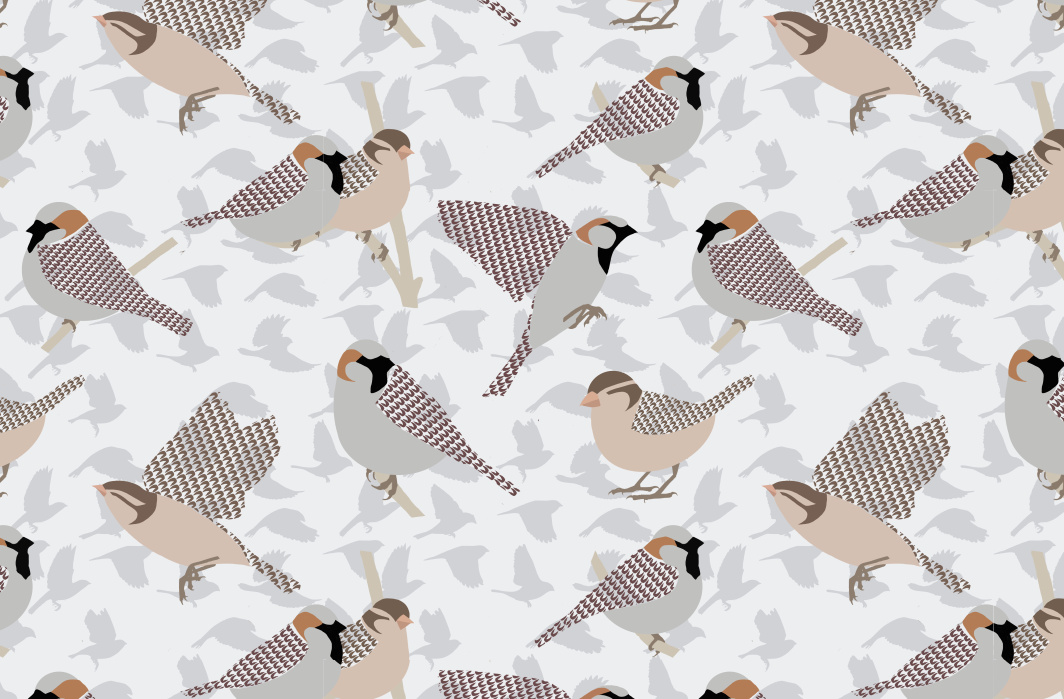
Since my tutorial I have been focusing on just one type of bird - I started with the house sparrow, but the past few days I haven't got very far with that idea, so today I thought I would have a crack at the Capercaillie, and see if I can make any more progress with my ideas.
Most of my research so far has been through the RSPB website, however the information here is quite limited. But, the RSPB works with a number of other trusts and charities in it's projects, and luckily for me, some of their information is much better. In this document from the forestry commission Scotland, there is much more information about the plight of the capercaillie;
Threats to capercaillieThe main threats to the species have recently been both physical and organisational. Physical factors, in no particular order, include fence collisions, loss of eggs and chicks to predators, overgrazing, loss and fragmentation of pinewood habitat, lack of suitable brood habitat and human disturbance. Last but not least, a series of cold springs and wet summers, possibly connected to wider climatic change, has resulted in greater chick mortality. Organisational factors have included a limited capacity for long-term management and monitoring within core capercaillie areas, although this has improved substantially through recent conservation action. Effective future management of capercaillie must deal with this broad range of issues...
Capercaillie conservation action to date
Recent action has focused mainly on a major project funded partly by EU LIFE funds, partly match funded by Forestry Commission Scotland grants and action on the national forest estate. It delivered the following outputs in the period 2002-7:
• population monitoring on all project sites, covering 35,000 ha
• cver 1,000 hectares of habitat improved for chicks
• over 400 hectares of new chick habitat created through variable density
thinning and glade creation within dense plantations
• capercaillie-friendly management in 1,600 hectares of plantations
• predation reduced in over 34,000 hectares of forest
• 12 kilometres of deer fencing taken down to stop capercaillie collisions
• 22 kilometres of deer fencing marked to reduce capercaillie collisions...
The capercaillie species action planCapercaillie is a UK priority species for conservation action. The Capercaillie Biodiversity Action Plan Group is responsible for delivering the species action plan for capercaillie and is the essential lead contact for conservation advice, background guidance and more detailed information on the species. They also co-ordinate research and policy development and have a wide and representative membership. The Capercaillie Project Officer, funded by the Royal Society for the Protection of Birds (RSPB), SNH and Forestry Commission Scotland, has an important advisory role and encourages and assists forest managers to implement action for capercaillie in their forests.
(Forestry Commission Scotland, 2014)
There is also the information on the capercallie biodiversity plan from the RSPB website it's self;
Work planned or underwayWhat do we plan to do next?
- Continue to work with partners, especially FCS and SNH, to undertake practical measures to improve their breeding success and survival. These measures include: reducing the threat posed by fences in the core areas, delivering direct management on the ground , ensuring strict implementation of relevant policies and providing advice on funding opportunities to estates under the Scotland Rural Development Programme.
- Continue working with forest managers on all key sites for capercaillie
- Continue to undertake research and monitoring to inform conservation action
- Increase publicity for the plight of the capercaillie in Scotland
- Organising regional surveys covering over 80 leks and assisting with brood counts throughout the capercaillie range
- Holding advisory events targeting forestry managers and estate managers
- Researching the impacts the recovering population of pine martens may have on capercaillie breeding success
What are the constraints to fully achieving the targets?
- Deer, fencing and forestry management issues. Deer numbers remain high and there is still a problem with too much grazing and browsing on many sites
- Cold temperatures and wet weather in June, when the chicks are small, can reduce chick survival significantly
- It is thought that changes to spring weather patterns are having a negative impact on the nutritional status of females during egg formation – though the scientific case is not proven categorically yet
- Increases in mammalian predators such as foxes and crows may be having a negative effect on productivity.
(The RSPB, 2014)
One of the things that has been suggested to me is that I take each group/bird and appeal to a different audience with each one (outcome?)...so far, I'm struggling to come up with the things that I may end up creating, however, from looking at the goals of the conservation projects, and the reasons for the capercallie appearing on the RL, I am able to identify who my audience may be (land owners and farmers, and walkers/bird watchers being two solid groups that my work will need to be aimed at - producing two different things to do just that). Any thing that I make will then be tied together by my designs that generally have a much wider appeal that the current stuff that is used by the RSPB and other trusts and charities (wider appeal, more interest, hopefully).
_______________________________________________________
After previously looking at the work of Mel Lim (Blog entry 4) I decided that I wanted my patterns to be lots thicker, with more layers and elements to the design. This is also a good way to implement my original idea of including all the relevant information about the bird.
 |
| Pine pattern - experimentation background pattern |
Capercaillie likes coniferous forests, so I wanted to use the pine and deep greens, also with using deep greens, and red on the birds, I thought that this might also reflect most commonly used colours of tartan (Scottish etc. is that a bit of stretch? Wanted to hint at Scotland with out making capercaillie themed tartan, not sure whether either of this works...). Like in Mel Lim's work, I want to create a really thick detailed patter with lots of little bits, so far i'm thinking of having a couple of subtle patterns working below the actual pattern that includes the birds.
[Now I'm looking at this and thinking..does it just look like fern??]
 |
| Pine pattern - experimentation background pattern (detail) |
 |
| Experimentation - pattern elements |
As well as starting to think about the individual bits that would make up my pattern, I also stared to think about the bird itself (colours, positions, composition yadda yadda..) and it struck me that this one is a pain for the simple style which I have adopted, because this bird is iridescent. I had the same problem when trying to create a lapwing...it appears to be black, but actually shines a variety of different colours in different places. Although it would be possible to identify it if shown as being black..it isn't accurate, however the images work better when shown as black. Luckily, with the lapwing having quite a unique shape, this helped..but with capercaillie, if shown as being all black, it may be confused with a black grouse (also Red Listed).
 |
| Capercaillie - experimentation with colour |
Tried to show the different colours of the bird...this may work better if the colours were closer to black than I have gone with here..?
 |
| Capercaillie - experimentation with colour |
This really does look much better all black, but am not sure if it is identifiable as a capercaillie..further experimentation is required I think.
 |
| Capercaillie - experimentation with colour |
I think this is slightly better, the colours more just hint at the true colours of the bird, rather than just ignoring it, and depicting it as a black bird...but this differentiation in colour is going to be difficult to print..it works on a screen, but getting the colours right to print could potentially be a bit of a mare.
Today have got lots of little rough bits and ideas together; tomorrow I might try and see if I can make this into a pattern, or at least a first draft of a pattern.
I also need to spend some of my time thinking of the ways in which my work can help the conservation effort - the things that my pattern may be used on to make a difference...I really need to get some idea soon...
Forestry Commission Scotland, (2014). Action for capercaillie. [online] Available at: http://www.forestry.gov.uk/pdf/fcs-action-capercaillie.pdf/$FILE/fcs-action-capercaillie.pdf [Accessed 8 Oct. 2014].